.png)
Customer-Centricity in the Age of AI: What We Learned in Boston
- 5 hours ago
- 4 min read
There’s a version of these “AI in Marketing” events where everyone talks about AI like it’s already solved marketing, but this “Customer Centric Growth In the Age of AI” B2B marketing event in Boston with the CMO Council wasn’t that.
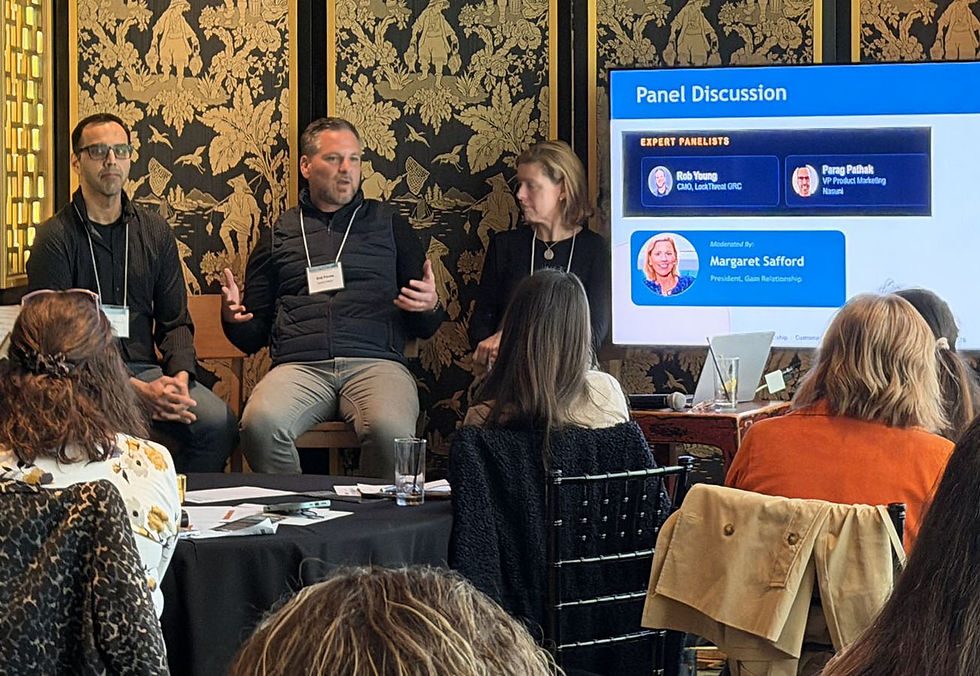
What made this event different was how raw and honest the conversations were. In an intimate setting with small bites and drinks, the conversation revolved less around what AI can do and more about where things are actually breaking down.
And right now, a lot is.
We Have The Tools. We’re Short on Clarity.
The day opened with Sophia Agustina from Gain Relationship grounding the conversation in the 9 Cs framework—connecting customer, content, campaign, channel, and conversion into a single system.
It sounds so simple, but especially when it comes to AI, most teams aren’t operating that way yet.
Across the sessions and roundtables, what kept coming up was that teams aren’t so much behind on AI, but they’re feeling overwhelmed by it.
There’s no shortage of platforms, agents, or ideas. But stitching it together into a framework that drives pipeline? That’s where things get murky.
The data reinforces it:
Most companies are still early in personalization maturity
Only a small percentage are consistently acting on behavioral data
And even fewer are truly personalizing in a meaningful way
None of that points to a lack of ambition.
It points to a lack of cohesion.
You can feel it in how marketers describe their day-to-day:
“We’re doing a lot; we’re just not sure what’s actually moving the needle.”

AI Is Changing the Shape of Marketing Teams
Kathleen Joyce, currently working at Bridge Partners in AI and frontier marketing, brought one of the more forward-looking perspectives of the day:
Marketing is shifting from campaigns to continuous systems.
Here’s what that looks like in practice:
Always-on optimization
Real-time decisioning
AI agents running experimentation loops in the background
That shift has a downstream effect most teams are just starting to feel: the job of marketing is changing.
The panel discussion made that tangible.
Parag Pathak, VP of Product Marketing from Nasuni, talked about integrating tools like Claude agents and AI frameworks and Gong to continuously refine targeting and workflows as an ongoing learning system.
CMO of LockThreat, Rob Young shared something that came up in almost every conversation after:
Instead of hiring a “Digital Marketing Manager,” he brought on a “GTM Engineer.”
This was someone who was able to connect systems, operationalize AI, and build the infrastructure behind execution. He realized what he needed wasn’t more campaigns, but someone who could understand the technology to execute them more effectively.
The 5% That Actually Matters
Rob also made a point that landed hard in the room:
Focus on the 5% of buyers who are in-market—not the 95% who aren’t.
It’s a simple idea, but historically hard to execute. However, in the age of AI, where everyone can produce more content and more activity, the 95% actually becomes harder to reach amid the noise. At the same time, with the right tools and targeting, the 5% becomes easier to identify and engage.
We’re starting to see a shift toward:
Fewer, more relevant interactions
Higher-quality content that drives buyer action
Messaging that is grounded in proof and personalization
These shifts in efficiency come as the pressure mounts to prove results.

Engagement Is Up. Confidence Is Not.
Matthew Stein, Agent Marketplace Architect, brought a different kind of clarity with his session on “AI slop.”
His point was blunt:
AI didn’t just lower the cost of producing content—it shifted the burden to the person receiving it.
More output doesn’t mean more value. In many cases, it just means more to sift through, interpret, and validate.
That idea connects directly to what we’re seeing across the funnel.
Michael Greenhut, Co-founder of Energize Marketing®, built on this with a clear articulation of what’s happening in the market right now:
Engagement is up. Pipeline isn’t.
Buyers are engaging earlier, but deals are getting slower, more complex, and harder to close.
Why?
Because confidence is breaking down. More stakeholders means more scrutiny. Signals without context don’t drive action. Misalignment between marketing and sales resets momentum.
And the data backs it up:
93% of marketers report only moderate or low effectiveness from intent data
With the proliferation of AI content, with all its slop and noise, credibility is harder to achieve.
As Michael outlined, high-performing teams are focused on understanding and connecting with buyers, starting with proof through research-led content, activating signals with real context (who, what, and why), and aligning marketing and sales around shared execution.
Because when buyers don’t trust what they’re seeing, they don’t act.
The Conversations Between the Sessions
Some of the most valuable moments came from the honest conversations our team had with other marketers.
I spoke with several marketers navigating things like smaller teams, growing expectations to modernize, and of course, the constant pressure to prove ROI quickly.
They’re trying to move forward without breaking what already works, investing in tools without fully knowing which ones will matter long-term, and they’re being asked to do more with less room for error. Layered into all of this is the expectation to personalize at scale, to be creative, to stand out and somehow not feel intrusive in the process.
Do the math on that; it’s enough to make anyone lose their marbles.
Where This Leaves Us
If there’s one thing that tied the day together, across Sophia’s framework to Kathleen’s systems thinking to Matthew’s push for clarity to Michael’s focus on credibility, it’s that marketing isn’t being replaced. Instead, it’s being rebuilt while we’re all still operating inside of it.
Systems are replacing one-off campaigns
Roles are shifting toward architecture and orchestration
Personalization is getting closer—but still uneven
And credibility is becoming harder to earn, and more valuable when you have it
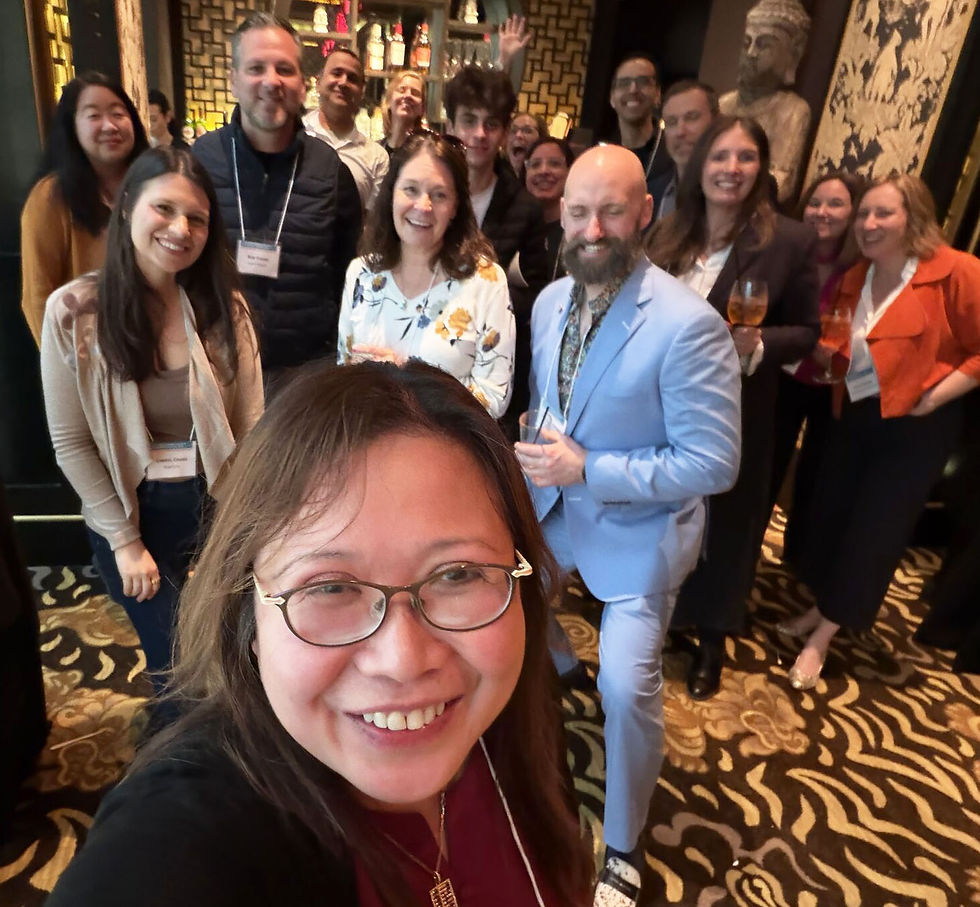
This event in Boston provided us with a snapshot of where things actually are. We’re in flux, but we’re starting to figure out ways forward.
Chasing every new tool out there isn’t going to create efficiency, but focusing on how your buyers actually make decisions, how your systems make sense internally, and creating work that people trust enough to act on will help create the momentum we’re all seeking.
The marketers who win in this next phase will use AI to create clarity, build confidence, and make it easier for buyers to say yes.


Comments