.png?width=2146&height=704&name=Energize%20Marketing%20(92).png)
Cybersecurity marketers operate in one of the most demanding B2B environments. Buying committees are larger, decisions carry operational risk, and credibility matters at every stage of the funnel.
To understand how demand generation teams operate in this environment, Energize Marketing analyzed responses from cybersecurity leaders within our global State of Demand Generation 2026 research.
The findings highlight how cybersecurity teams generate pipeline, use intent signals, and align marketing with sales across complex buying cycles.
Intent signals are everywhere, but activation remains a challenge
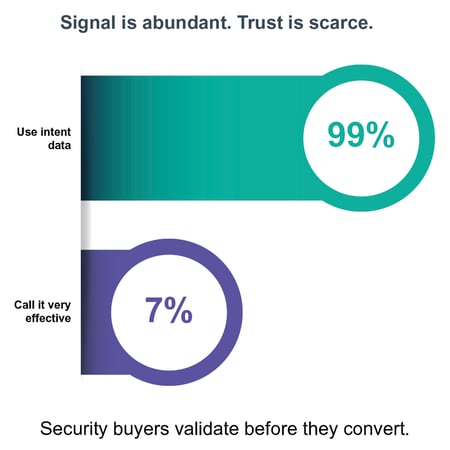
Nearly all cybersecurity teams use third-party intent data, but only a small share report that it is highly effective. Many organizations collect strong signals but lack consistent processes to translate them into coordinated marketing and sales action.
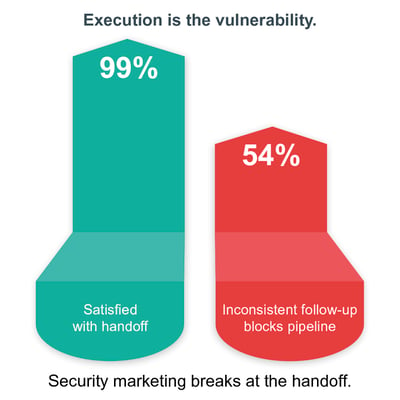
The biggest pipeline barrier is inconsistent follow up
When qualified leads stall, the most common cause is inconsistent sales follow-up, followed by unclear lead scoring and shifting buying committees. These are operational gaps rather than technology problems.